The Conegliano Valdobbiadene hills became a UNESCO World Heritage Site in 2019 — recognised as a landscape shaped by human hands over centuries of wine cultivation. We have lived and worked here for generations. This is not a travel blog guide written from a city desk. It is what we actually tell our guests when they arrive.Le colline di Conegliano Valdobbiadene sono diventate Patrimonio UNESCO nel 2019 — riconosciute come paesaggio plasmato dalle mani dell'uomo nel corso di secoli di viticoltura. Viviamo e lavoriamo qui da generazioni. Non è una guida scritta da una scrivania in città. È quello che diciamo davvero ai nostri ospiti quando arrivano.
Understanding Prosecco — what makes this region specialIl Prosecco — cosa rende speciale questa regione
Most people think of Prosecco as a generic sparkling wine. The Conegliano Valdobbiadene Prosecco Superiore DOCG — the wine produced in the hills surrounding La Torre di Rua — is something entirely different. It is produced from Glera grapes grown on the steep, south-facing slopes of the Treviso hills, using a method (Charmat) that preserves the delicate floral and fruit aromas that distinguish it from Champagne.La maggior parte delle persone pensa al Prosecco come a uno spumante generico. Il Conegliano Valdobbiadene Prosecco Superiore DOCG — il vino prodotto nelle colline intorno a La Torre di Rua — è qualcosa di completamente diverso. Viene prodotto da uve Glera coltivate sui ripidi pendii esposti a sud delle colline trevigiane, con un metodo (Charmat) che preserva i delicati aromi floreali e fruttati che lo distinguono dallo Champagne.
The
Conegliano Valdobbiadene Prosecco Superiore DOCG — the wine produced in the hills surrounding La Torre di Rua — is something entirely different. It is produced from Glera grapes grown on the steep, south-facing slopes of the Treviso hills, using a method (Charmat) that preserves the delicate floral and fruit aromas that distinguish it from Champagne.
The landscape itself is extraordinary — a mosaic of small plots on impossibly steep hillsides, maintained by hand because machinery cannot work them. Each family tends their own parcel. The wine from one slope tastes different from the wine produced 200 metres away on another. This is the story the UNESCO designation is protecting.Il paesaggio stesso è straordinario — un mosaico di piccoli appezzamenti su pendii incredibilmente ripidi, mantenuti a mano perché i macchinari non possono lavorarci. Ogni famiglia cura il proprio pezzo. Il vino di un versante ha un sapore diverso dal vino prodotto 200 metri più in là. È questa la storia che la designazione UNESCO protegge.
— a mosaic of small plots on impossibly steep hillsides, maintained by hand because machinery cannot work them. Each family tends their own parcel. The wine from one slope tastes different from the wine produced 200 metres away on another. This is the story the UNESCO designation is protecting.
Poderi di Rua, the estate that surrounds La Torre, produces its own Prosecco Superiore DOCG. Your hosts can arrange a tasting at the estate. A bottle is waiting for you on arrival.Poderi di Rua, la tenuta che circonda La Torre, produce il proprio Prosecco Superiore DOCG. I vostri host possono organizzare una degustazione in cantina. Una bottiglia vi aspetta all'arrivo.
, produces its own Prosecco Superiore DOCG. Your hosts can arrange a tasting at the estate. A bottle is waiting for you on arrival.
What to order:Cosa ordinare: Ask for a Prosecco Superiore Dry rather than Brut — the slight residual sweetness balances the natural acidity of the Glera grape beautifully. Avoid anything labelled simply "Prosecco DOC" — this is mass-produced wine from the plains, not from these hills.Chiedete un Prosecco Superiore Dry piuttosto che il Brut — la leggera dolcezza residua bilancia magnificamente l'acidità naturale del vitigno Glera. Evitate qualsiasi cosa etichettata semplicemente "Prosecco DOC" — è vino prodotto in serie dalla pianura, non da queste colline. rather than Brut — the slight residual sweetness balances the natural acidity of the Glera grape beautifully. Avoid anything labelled simply "Prosecco DOC" — this is mass-produced wine from the plains, not from these hills.
Wine tasting in the hillsDegustazione nelle colline
The Strada del Prosecco — the official wine route — passes through San Pietro di Feletto, directly past La Torre di Rua. Dozens of small family estates along the route offer tastings, usually without reservation, usually for free or for a nominal fee. This is not a commercial wine tourism operation — it is simply how the producers have always welcomed visitors.
-
Estate winery · on site
Poderi di Rua
The estate surrounding La Torre. Your hosts are the winemakers. Ask for a tour of the vineyard and a tasting — they will be happy to explain the different plots and vintages. The wine is available to purchase directly.La tenuta che circonda La Torre. I vostri host sono i produttori di vino. Chiedete un tour del vigneto e una degustazione — saranno felici di spiegare i diversi appezzamenti e le annate. Il vino è disponibile per l'acquisto diretto. Your hosts are the winemakers. Ask for a tour of the vineyard and a tasting — they will be happy to explain the different plots and vintages. The wine is available to purchase directly.
-
Cantina · 5 km
Cantina Sociale di Conegliano
One of the historic cooperative wineries of the region, with an excellent selection of Prosecco Superiore at fair prices. Open Monday–Saturday.Una delle storiche cantine cooperative della regione, con un'eccellente selezione di Prosecco Superiore a prezzi equi. Aperta lunedì–sabato. of the region, with an excellent selection of Prosecco Superiore at fair prices. Open Monday–Saturday.
-
Estate · 8 km
Bisol Desiderio & Figli
One of the most respected producers in the Valdobbiadene area. Their Cartizze — from the single finest hillside in the entire DOCG — is considered the grand cru of Prosecco. Visits by appointment.Uno dei produttori più rispettati della zona di Valdobbiadene. Il loro Cartizze — dal singolo versante più pregiato dell'intera DOCG — è considerato il grand cru del Prosecco. Visite su appuntamento. in the Valdobbiadene area. Their Cartizze — from the single finest hillside in the entire DOCG — is considered the grand cru of Prosecco. Visits by appointment.
-
Historic estate · 12 km
Carpené Malvolti
Founded in 1868 in Conegliano, the oldest Prosecco producer still in operation. A museum and cellar tour give excellent context to the history of the region. Open for visits and tastings.Fondata nel 1868 a Conegliano, la più antica produttrice di Prosecco ancora attiva. Un museo e un tour della cantina danno un ottimo contesto alla storia della regione. Aperta per visite e degustazioni., the oldest Prosecco producer still in operation. A museum and cellar tour give excellent context to the history of the region. Open for visits and tastings.
Harvest season:Stagione della vendemmia: September and October are the best months to be in the hills. The vendemmia (harvest) transforms the landscape — workers moving through the vineyards at dawn, the smell of fermenting must in the air, the hills glowing gold and red. Prices at La Torre di Rua are slightly higher in September for good reason.Settembre e ottobre sono i mesi migliori per stare nelle colline. La vendemmia trasforma il paesaggio — i raccoglitori tra i filari all'alba, il profumo del mosto in fermentazione nell'aria, le colline che brillano d'oro e rosso. I prezzi a La Torre di Rua sono leggermente più alti a settembre per buone ragioni. to be in the hills. The vendemmia (harvest) transforms the landscape — workers moving through the vineyards at dawn, the smell of fermenting must in the air, the hills glowing gold and red. Prices at La Torre di Rua are slightly higher in September for good reason.
Medieval villages worth visitingBorghi medievali da visitare
The Prosecco hills are scattered with small medieval borghi — villages that have barely changed since the 14th century. Most visitors drive past them on the way to somewhere else. They are worth stopping for.Le colline del Prosecco sono disseminate di piccoli borghi medievali — villaggi rimasti quasi invariati dal XIV secolo. La maggior parte dei visitatori li supera in auto diretti altrove. Vale la pena fermarsi.
— villages that have barely changed since the 14th century. Most visitors drive past them on the way to somewhere else. They are worth stopping for.
-
Medieval village · 2 km
San Pietro di Feletto — Pieve
The ancient parish church of San Pietro di Feletto dates to the 11th century and contains remarkable Romanesque frescoes. The view from the churchyard across the hills to the Alps is one of the finest in the region. Open daily; free entry.L'antica pieve di San Pietro di Feletto risale all'XI secolo e contiene notevoli affreschi romanici. La vista dal sagrato sulle colline e sulle Alpi è una delle più belle della regione. Aperta tutti i giorni; ingresso libero. of San Pietro di Feletto dates to the 11th century and contains remarkable Romanesque frescoes. The view from the churchyard across the hills to the Alps is one of the finest in the region. Open daily; free entry.
-
Town · 18 km
Conegliano
The cultural capital of the Prosecco hills, birthplace of the painter Cima da Conegliano. A beautifully preserved medieval centro storico with a castle, a duomo with a Cima altarpiece, and excellent restaurants. The porticoed main street is one of the finest in the Veneto.La capitale culturale delle colline del Prosecco, patria del pittore Cima da Conegliano. Un magnificamente conservato centro storico medievale con un castello, un duomo con una pala d'altare del Cima e ottimi ristoranti. Il porticato principale è uno dei più belli del Veneto., birthplace of the painter Cima da Conegliano. A beautifully preserved medieval centro storico with a castle, a duomo with a Cima altarpiece, and excellent restaurants. The porticoed main street is one of the finest in the Veneto.
-
Town · 25 km
Vittorio Veneto
A larger town with a particularly beautiful medieval quarter (Serravalle) and a good local museum documenting the Battle of Vittorio Veneto (1918). The market on Tuesdays is excellent.Una città più grande con un bellissimo quartiere medievale (Serravalle) e un buon museo locale che documenta la Battaglia di Vittorio Veneto (1918). Il mercato del martedì è eccellente. (Serravalle) and a good local museum documenting the Battle of Vittorio Veneto (1918). The market on Tuesdays is excellent.
-
Village · 30 km
Follina
A tiny village in the Valdobbiadene hills with a magnificent Cistercian abbey, completely intact, open for visits. The surrounding landscape is among the most photogenic in the entire region. Several excellent restaurants nearby.Un piccolo borgo sulle colline di Valdobbiadene con una magnifica abbazia cistercense, completamente intatta, aperta alle visite. Il paesaggio circostante è tra i più fotografati dell'intera regione. Diversi ottimi ristoranti nelle vicinanze. with a magnificent Cistercian abbey, completely intact, open for visits. The surrounding landscape is among the most photogenic in the entire region. Several excellent restaurants nearby.
-
Town · 35 km
Asolo
Called "the city of a hundred horizons" by Carducci. One of the most beautiful small towns in Italy — perched on a hill with views across the plains to Venice. Piazza Brugnoli, the Rocca, the Teatro Duse. Worth a full day.Chiamata "la città dei cento orizzonti" da Carducci. Uno dei borghi più belli d'Italia — arroccato su una collina con vista sulla pianura fino a Venezia. Piazza Brugnoli, la Rocca, il Teatro Duse. Vale una giornata intera. by Carducci. One of the most beautiful small towns in Italy — perched on a hill with views across the plains to Venice. Piazza Brugnoli, the Rocca, the Teatro Duse. Worth a full day.
Your base in the hills
La Torre di Rua puts you at the centre of this landscape — 3 bedrooms, rooftop terrace with 360° views, private garden, and the estate's own Prosecco waiting for you on arrival.
View La Torre di Rua
Calculate Price
Where to eatDove mangiare
The cooking of the Treviso hills is among the most underrated in Italy. It draws on a tradition of cucina povera — simple, seasonal, honest — elevated by extraordinary raw ingredients. Radicchio di Treviso, Montasio cheese, wild mushrooms, polenta, game. The wines are poured by the carafe at prices that will surprise anyone used to restaurant wine lists in cities.La cucina delle colline trevigiane è tra le più sottovalutate d'Italia. Attinge a una tradizione di cucina povera — semplice, stagionale, onesta — esaltata da materie prime straordinarie. Radicchio di Treviso, formaggio Montasio, funghi selvatici, polenta, selvaggina. I vini si versano al carafone a prezzi che stupiranno chiunque sia abituato alle carte dei vini dei ristoranti di città.
It draws on a tradition of cucina povera — simple, seasonal, honest — elevated by extraordinary raw ingredients. Radicchio di Treviso, Montasio cheese, wild mushrooms, polenta, game. The wines are poured by the carafe at prices that will surprise anyone used to restaurant wine lists in cities.
-
Trattoria · 5 km
Trattoria da Gerry
A simple family trattoria in the hills above Conegliano. No menu — the owner tells you what was made that day. Homemade pasta, grilled meats, local wine by the litre. The terrace has a view across the vineyards. Cash only. Closed Monday.Una semplice trattoria familiare nelle colline sopra Conegliano. Nessun menu — il proprietario vi dice cosa è stato fatto quel giorno. Pasta fatta in casa, carni alla griglia, vino locale al litro. La terrazza ha vista sui vigneti. Solo contanti. Chiuso il lunedì. above Conegliano. No menu — the owner tells you what was made that day. Homemade pasta, grilled meats, local wine by the litre. The terrace has a view across the vineyards. Cash only. Closed Monday.
-
Osteria · 18 km · Conegliano
Osteria La Corte
In the centro storico of Conegliano. Excellent cicchetti, a fine selection of local Prosecco by the glass, and serious main courses. Popular with locals at lunch.Nel centro storico di Conegliano. Eccellenti cicchetti, una buona selezione di Prosecco locale al calice e piatti principali seri. Frequentata dai locali a pranzo. Excellent cicchetti, a fine selection of local Prosecco by the glass, and serious main courses. Popular with locals at lunch.
-
Restaurant · 27 km · Treviso
Toni del Spin
A Treviso institution, open since 1946. Traditional Venetian and local cooking — bigoli in salsa, fegato alla veneziana, tiramisù. The tiramisù was reportedly invented in Treviso, and this is one of the places that claims the original recipe. Book ahead.Un'istituzione trevigiana, aperta dal 1946. Cucina veneziana e locale tradizionale — bigoli in salsa, fegato alla veneziana, tiramisù. Il tiramisù sarebbe stato inventato a Treviso, e questo è uno dei locali che rivendica la ricetta originale. Prenotare in anticipo., open since 1946. Traditional Venetian and local cooking — bigoli in salsa, fegato alla veneziana, tiramisù. The tiramisù was reportedly invented in Treviso, and this is one of the places that claims the original recipe. Book ahead.
-
Restaurant · 30 km · Follina
Locanda da Lino
One of the finest restaurants in the region, in a converted farmhouse near Follina. Refined local cooking, exceptional wine list focused on the Valdobbiadene area. Worth the drive for a special dinner. Book well in advance.Uno dei migliori ristoranti della regione, in una cascina ristrutturata vicino a Follina. Cucina locale raffinata, eccezionale carta dei vini focalizzata sulla zona di Valdobbiadene. Vale il viaggio per una cena speciale. Prenotare con molto anticipo., in a converted farmhouse near Follina. Refined local cooking, exceptional wine list focused on the Valdobbiadene area. Worth the drive for a special dinner. Book well in advance.
Cycling the Prosecco TrailIn bicicletta sulla Strada del Prosecco
The Strada del Prosecco e Vini dei Colli Conegliano Valdobbiadene is officially recognised as Italy's first wine road, established in 1966. It runs for approximately 50 kilometres through the hills from Conegliano to Valdobbiadene, passing through vineyards, small villages, and estates. It is also an excellent cycling route.La Strada del Prosecco e Vini dei Colli Conegliano Valdobbiadene è ufficialmente riconosciuta come la prima strada del vino d'Italia, istituita nel 1966. Si snoda per circa 50 chilometri attraverso le colline da Conegliano a Valdobbiadene, passando per vigneti, piccoli borghi e tenute. È anche un eccellente percorso ciclabile.
is officially recognised as Italy's first wine road, established in 1966. It runs for approximately 50 kilometres through the hills from Conegliano to Valdobbiadene, passing through vineyards, small villages, and estates. It is also an excellent cycling route.
The terrain is hilly — some sections are steep — but the roads are quiet, the scenery extraordinary, and at every point there is a cantina where you can stop. Electric bikes are available for rental in Conegliano and Valdobbiadene. We can arrange bike hire from La Torre on request.Il terreno è collinare — alcune sezioni sono ripide — ma le strade sono tranquille, il paesaggio straordinario, e ad ogni punto c'è una cantina dove fermarsi. Le biciclette elettriche sono disponibili a noleggio a Conegliano e Valdobbiadene. Possiamo organizzare il noleggio di bici da La Torre su richiesta.
— but the roads are quiet, the scenery extraordinary, and at every point there is a cantina where you can stop. Electric bikes are available for rental in Conegliano and Valdobbiadene. We can arrange bike hire from La Torre on request.
Best section for a half-day ride:Il tratto migliore per mezza giornata: From San Pietro di Feletto to Follina and back — approximately 35 kilometres with moderate hills. The descent into the Valdobbiadene valley is particularly spectacular.Da San Pietro di Feletto a Follina e ritorno — circa 35 chilometri con colline moderate. La discesa nella valle di Valdobbiadene è particolarmente spettacolare. From San Pietro di Feletto to Follina and back — approximately 35 kilometres with moderate hills. The descent into the Valdobbiadene valley is particularly spectacular.
Day trip to VeniceGita di un giorno a Venezia
Venice is 47 kilometres from La Torre di Rua — approximately 50 minutes by car. This makes it entirely possible to spend a day in Venice and return to the peace and quiet of the hills in the evening, avoiding the expensive and noisy Venice hotels entirely.Venezia è a 47 chilometri da La Torre di Rua — circa 50 minuti in auto. Questo rende del tutto possibile trascorrere un giorno a Venezia e tornare alla pace e alla quiete delle colline la sera, evitando completamente i costosi e rumorosi alberghi veneziani.
This makes it entirely possible to spend a day in Venice and return to the peace and quiet of the hills in the evening, avoiding the expensive and noisy Venice hotels entirely.
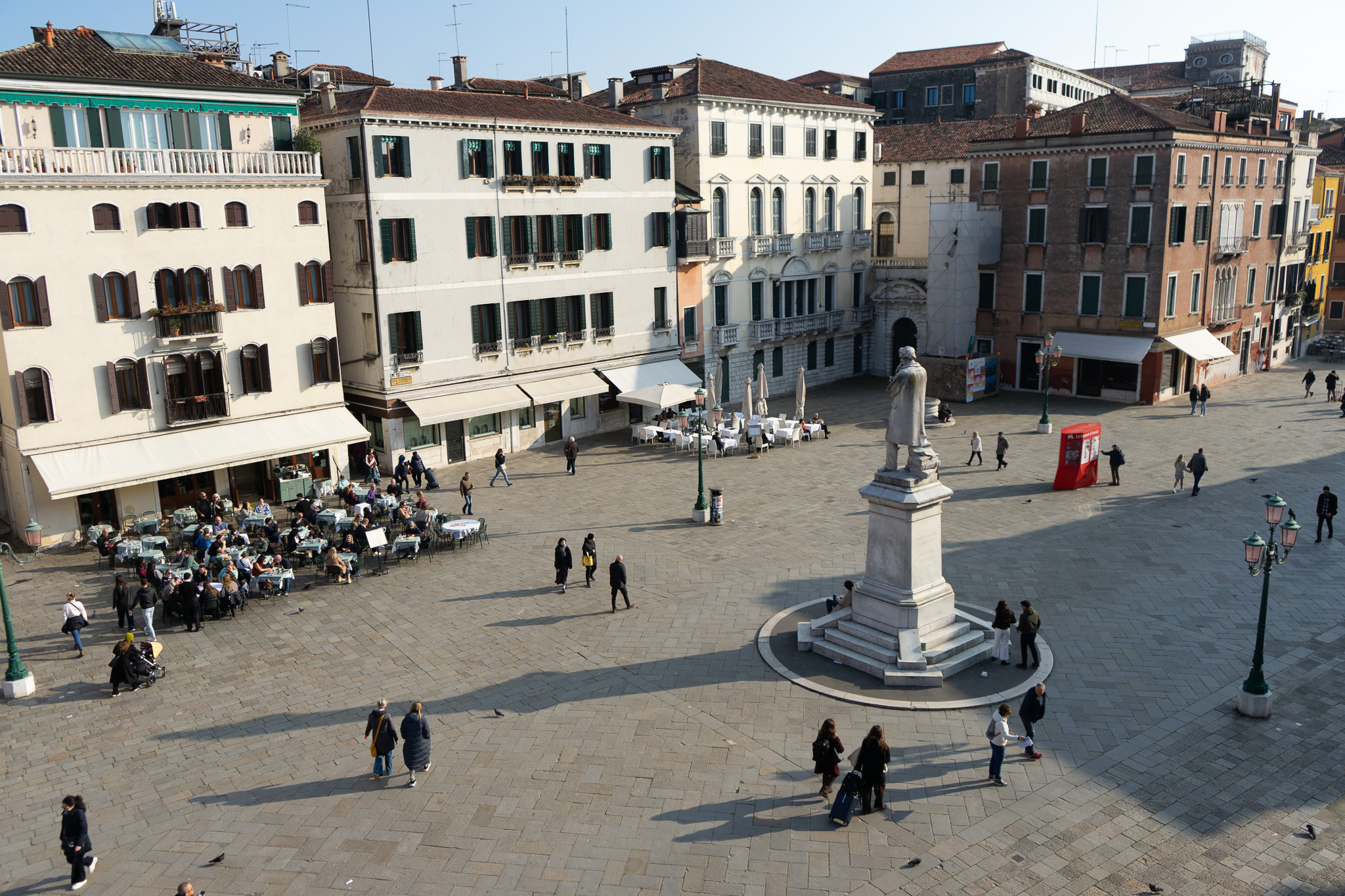
For a detailed guide to Venice itself, including the best restaurants and hidden gems near Campo Santo Stefano, read our Venice local guide →Per una guida dettagliata a Venezia, inclusi i migliori ristoranti e le gemme nascoste vicino a Campo Santo Stefano, leggete la nostra guida locale di Venezia →
, including the best restaurants and hidden gems near Campo Santo Stefano, read our
Venice local guide →
By train:In treno: Treviso has a direct train to Venice Santa Lucia (30 minutes, frequent departures). From La Torre to Treviso station is 25 minutes by car. Leave the car in Treviso, take the train, arrive in Venice relaxed. This is the best option.Treviso ha un treno diretto per Venezia Santa Lucia (30 minuti, partenze frequenti). Da La Torre alla stazione di Treviso ci vogliono 25 minuti in auto. Lasciate l'auto a Treviso, prendete il treno, arrivate a Venezia rilassati. È l'opzione migliore.
From La Torre to Treviso station is 25 minutes by car. Leave the car in Treviso, take the train, arrive in Venice relaxed. This is the best option.
By car:In auto: Drive to Mestre or Piazzale Roma, park (expensive — book in advance on apcoa.it), take the vaporetto into Venice. Less comfortable than the train but more flexible.Guidate fino a Mestre o Piazzale Roma, parcheggiate (costoso — prenotate in anticipo su apcoa.it), prendete il vaporetto per Venezia. Meno comodo del treno ma più flessibile.
, park (expensive — book in advance on
apcoa.it), take the vaporetto into Venice. Less comfortable than the train but more flexible.
Treviso — the quiet alternativeTreviso — l'alternativa tranquilla
Treviso is 27 kilometres from La Torre — a walled medieval city on the Sile river, with porticoed streets, canals, a magnificent fish market (Pescheria), and excellent restaurants. It receives a fraction of Venice's visitors and offers a completely authentic experience of Veneto city life.Treviso è a 27 chilometri da La Torre — una città medievale murata sul fiume Sile, con strade porticate, canali, un magnifico mercato del pesce (Pescheria) e ottimi ristoranti. Riceve una frazione dei visitatori di Venezia e offre un'esperienza completamente autentica della vita urbana veneta.
on the Sile river, with porticoed streets, canals, a magnificent fish market (Pescheria), and excellent restaurants. It receives a fraction of Venice's visitors and offers a completely authentic experience of Veneto city life.
The Duomo contains frescoes by Pordenone and a Titian Annunciation. The Museo di Santa Caterina has a remarkable collection of medieval frescoes. The Pescheria — the fish market on a small island in the canal — operates Tuesday to Saturday morning and is one of the most atmospheric market spaces in northern Italy.Il Duomo contiene affreschi del Pordenone e un'Annunciazione di Tiziano. Il Museo di Santa Caterina ha una straordinaria collezione di affreschi medievali. La Pescheria — il mercato del pesce su una piccola isola nel canale — è aperta dal martedì al sabato mattina ed è uno degli spazi di mercato più suggestivi del nord Italia.
by Pordenone and a Titian Annunciation. The
Museo di Santa Caterina has a remarkable collection of medieval frescoes. The
Pescheria — the fish market on a small island in the canal — operates Tuesday to Saturday morning and is one of the most atmospheric market spaces in northern Italy.
Treviso also claims to be the birthplace of tiramisù. The debate with Friuli over the original recipe is ongoing; the Treviso version is the better argument.Treviso rivendica anche di essere la città natale del tiramisù. Il dibattito con il Friuli sulla ricetta originale è ancora in corso; la versione trevigiana è l'argomento più convincente.
The debate with Friuli over the original recipe is ongoing; the Treviso version is the better argument.
The harvest seasonLa stagione della vendemmia
September and early October are the peak of the Prosecco harvest. If you are staying at La Torre di Rua during this period, you will witness the vendemmia — grape picking — across the estate and the surrounding hills.Settembre e inizio ottobre sono il picco della vendemmia del Prosecco. Se soggiornate a La Torre di Rua durante questo periodo, assisterete alla vendemmia — la raccolta dell'uva — nella tenuta e nelle colline circostanti.
If you are staying at La Torre di Rua during this period, you will witness the vendemmia — grape picking — across the estate and the surrounding hills.
The pace of life in the hills slows and quickens simultaneously during harvest: the mornings begin before dawn with workers in the rows, the afternoons smell of fermenting must, the evenings are long and warm. Your hosts at Poderi di Rua will be at their busiest — and most hospitable.Il ritmo della vita nelle colline rallenta e accelera simultaneamente durante la vendemmia: le mattine iniziano prima dell'alba con i raccoglitori tra i filari, i pomeriggi sanno di mosto in fermentazione, le serate sono lunghe e calde. I vostri host di Poderi di Rua saranno al massimo dell'occupazione — e della loro ospitalità.
: the mornings begin before dawn with workers in the rows, the afternoons smell of fermenting must, the evenings are long and warm. Your hosts at Poderi di Rua will be at their busiest — and most hospitable.
Several local sagre (village festivals) take place in September and October, celebrating the new vintage. Ask your hosts for dates when you arrive — they change each year.Diverse sagre locali si svolgono a settembre e ottobre, celebrando il nuovo vino. Chiedete ai vostri host le date quando arrivate — cambiano ogni anno.
, celebrating the new vintage. Ask your hosts for dates when you arrive — they change each year.
Practical note:Nota pratica: The Prosecco hills are rural. A car is essential for exploring beyond the immediate area. Public transport exists but is limited. If you are coming by train, Treviso is the nearest major station (27km) and car hire is available there.Le colline del Prosecco sono rurali. Un'auto è essenziale per esplorare oltre l'area immediata. I trasporti pubblici esistono ma sono limitati. Se venite in treno, Treviso è la stazione principale più vicina (27km) e il noleggio auto è disponibile lì. A car is essential for exploring beyond the immediate area. Public transport exists but is limited. If you are coming by train, Treviso is the nearest major station (27km) and car hire is available there.
Getting hereCome arrivare
By car:In auto: From Venice, take the A27 motorway north towards Vittorio Veneto, exit at Conegliano, then follow signs towards San Pietro di Feletto. La Torre di Rua is signposted from the village. Private parking for 2 cars is included. Total journey: approximately 50 minutes from Venice.Da Venezia, prendete l'autostrada A27 verso nord in direzione Vittorio Veneto, uscite a Conegliano, poi seguite le indicazioni per San Pietro di Feletto. La Torre di Rua è segnalata dal paese. Parcheggio privato per 2 auto incluso. Tragitto totale: circa 50 minuti da Venezia.
towards Vittorio Veneto, exit at Conegliano, then follow signs towards San Pietro di Feletto. La Torre di Rua is signposted from the village. Private parking for 2 cars is included. Total journey: approximately 50 minutes from Venice.
From Marco Polo Airport (Venice):Dall'aeroporto Marco Polo (Venezia): Approximately 55 minutes by car. The most direct route is via the A27 motorway.Circa 55 minuti in auto. Il percorso più diretto è tramite l'autostrada A27.
Approximately 55 minutes by car. The most direct route is via the A27 motorway.
From Treviso Airport:Dall'aeroporto di Treviso: Approximately 35 minutes by car. A small regional airport with several low-cost carriers serving European destinations.Circa 35 minuti in auto. Un piccolo aeroporto regionale con diverse compagnie low-cost che servono destinazioni europee.
Approximately 35 minutes by car. A small regional airport with several low-cost carriers serving European destinations.
By train + car:In treno + auto: Train to Treviso Centrale (from Venice: 30 min; from Milan: 2h30), then hire a car at the station. Treviso to La Torre: 25 minutes.Treno fino a Treviso Centrale (da Venezia: 30 min; da Milano: 2h30), poi noleggio auto alla stazione. Da Treviso a La Torre: 25 minuti.
Train to Treviso Centrale (from Venice: 30 min; from Milan: 2h30), then hire a car at the station. Treviso to La Torre: 25 minutes.
We provide detailed arrival instructions, including GPS coordinates and photographs of the entrance, upon booking.Forniamo istruzioni dettagliate per l'arrivo, comprese le coordinate GPS e le fotografie dell'ingresso, al momento della prenotazione.
, including GPS coordinates and photographs of the entrance, upon booking.
Ready to stay in the hills?
La Torre di Rua — medieval tower, UNESCO Prosecco Hills, private garden, rooftop terrace. Venice 47km. From €145/night.La Torre di Rua — torre medievale, Colline del Prosecco UNESCO, giardino privato, terrazza sul tetto. Venezia 47km. Da €145/notte.
View La Torre di Rua
Calculate Price